
- Fresh Daily Detailing
How to Choose a Professional Car Auto Detailer for Long-Term Vehicle Protection
Vehicle paint does not deteriorate overnight. It degrades gradually due to ultraviolet radiation, surface contamination, improper washing techniques, and inconsistent protection. Many vehicle owners mistake shine for protection, yet long-term preservation depends on maintaining clear coat thickness, preventing oxidation, and applying scientifically sound surface treatments. In high-altitude regions where UV exposure is stronger and winter introduces road salt and freeze–thaw stress, deterioration accelerates.
Choosing the right car auto detailer requires evaluating technical expertise, environmental awareness, equipment standards, and long-term protection planning rather than selecting the lowest price. This guide explains how to make an informed decision.
Why Professional Auto Detailing Matters for Long-Term Protection
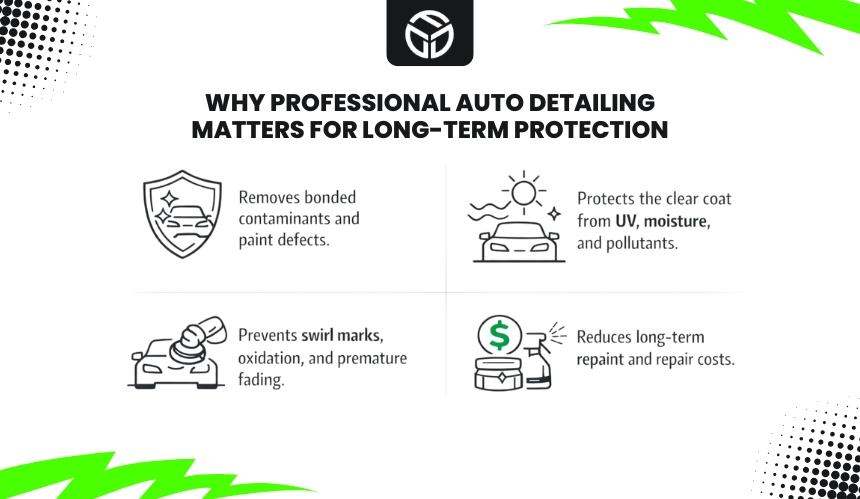
Professional detailing extends beyond cleaning. It focuses on correcting measurable paint defects, removing bonded contaminants, and applying protective barriers that slow environmental damage.
The Role of Clear Coat Preservation
Modern vehicles rely on a thin, clear coat layer to shield the base color from UV radiation, moisture, and pollutants. Excessive polishing or improper compounding reduces this layer, increasing vulnerability to oxidation and premature fading.
The Financial Impact of Improper Detailing
Incorrect detailing methods may cause swirl marks, buffer trails, or burned edges. Over time, these defects require repainting, significantly lowering resale value compared to maintaining the factory paint.
How Environmental Exposure Accelerates Damage
High-altitude UV intensity increases oxidation rates. Winter road salt accelerates corrosion along lower panels. Freeze–thaw cycles expand micro-cracks in paint surfaces. Dust and pollen create fine abrasions during dry wiping.
In areas such as Highlands Ranch, CO, rapid temperature swings and snow accumulation add stress to vehicle finishes, making professional protection strategies more important.
Key Qualifications to Look for in a Car Auto Detailer
Not all detailing providers operate at the same technical standard. Qualifications reveal whether a professional understands surface science and the limits of correction.
Industry Certifications and Professional Training
Affiliation with organizations such as the International Detailing Association (IDA) indicates structured education. Manufacturer-certified ceramic coating installers demonstrate knowledge of bonding procedures and curing requirements.
Insurance and Liability Protection
Professional insurance coverage protects both parties against accidental damage during paint correction or interior treatment.
Documented Experience in Paint Correction
Experienced professionals should explain defect depth analysis, multi-stage correction, and realistic outcome expectations rather than guaranteeing perfection on heavily damaged surfaces.
Evaluate the Tools and Equipment Used
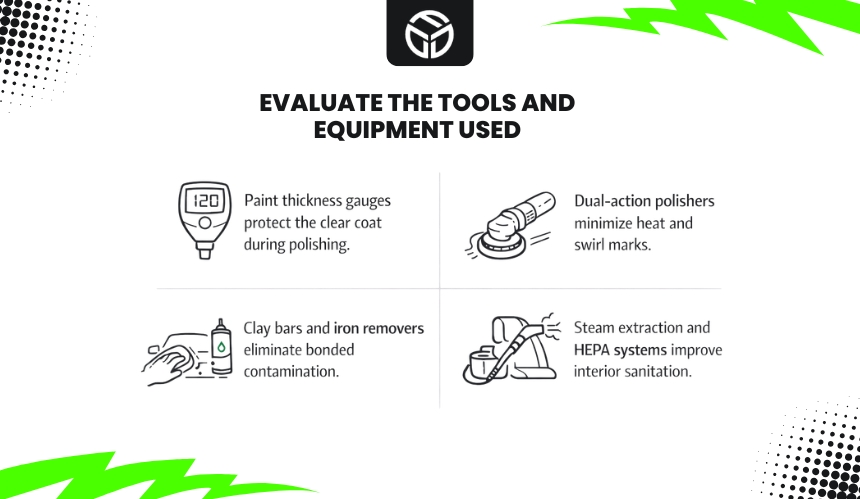
Professional-grade tools directly influence the accuracy of corrections and surface safety.
Paint Thickness Measurement Tools
A paint thickness gauge measures clear coat depth in microns. This prevents excessive polishing that could permanently weaken protective layers.
Machine Polishing Technology
Dual-action polishers reduce heat buildup and minimize hologram formation. Rotary buffers provide aggressive correction but require advanced control to avoid surface damage.
Decontamination Systems
Effective preparation may include:
- Clay bar treatment for bonded surface particles
- Iron removal chemicals for brake dust contamination
- Tar and adhesive removers
Skipping decontamination reduces coating durability and gloss consistency.
Interior Detailing Equipment Standards
Steam extraction systems sanitize without excessive moisture saturation. HEPA filtration improves allergen removal. pH-balanced cleaners prevent cracking or discoloration of leather and plastic components.
Understanding Long-Term Protection Services
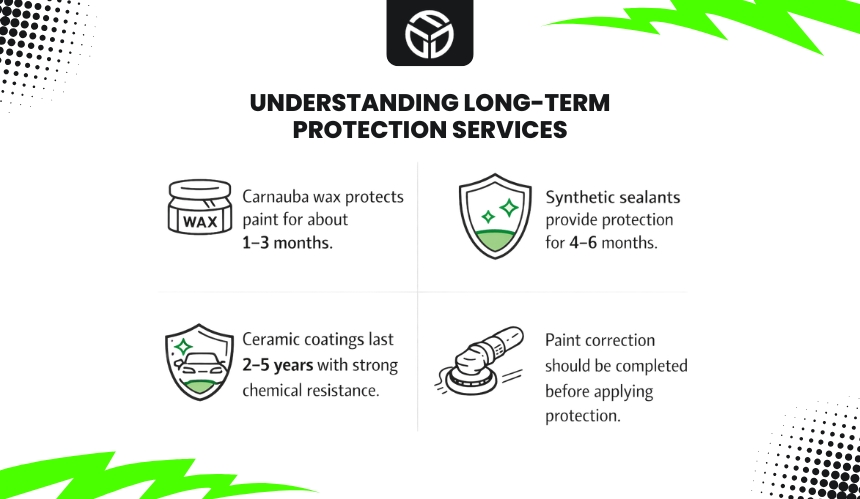
Surface shine is temporary. True protection requires evaluating durability, environmental resistance, and compatibility with maintenance.
Comparing Wax, Sealant, and Ceramic Coating
Protection Type | Longevity | UV Resistance | Cost Range | Maintenance Needs |
Carnauba Wax | 1–3 months | Moderate | Low | Frequent reapplication |
Synthetic Sealant | 4–6 months | Good | Moderate | Semi-annual refresh |
Ceramic Coating | 2–5 years | Excellent | Higher | Annual inspection |
Ceramic coatings form a semi-permanent bond that enhances chemical resistance and hydrophobicity.
When Paint Correction Is Required Before Protection
Applying coatings over swirl marks or oxidation traps imperfections beneath the protective layer. Proper correction removes measurable defects prior to bonding.
Climate-Based Protection Planning
Protection frequency depends on exposure. Vehicles subjected to heavy UV radiation, road salt, and dust accumulation require stronger and more frequent protective measures.
How to Assess Service Transparency and Process
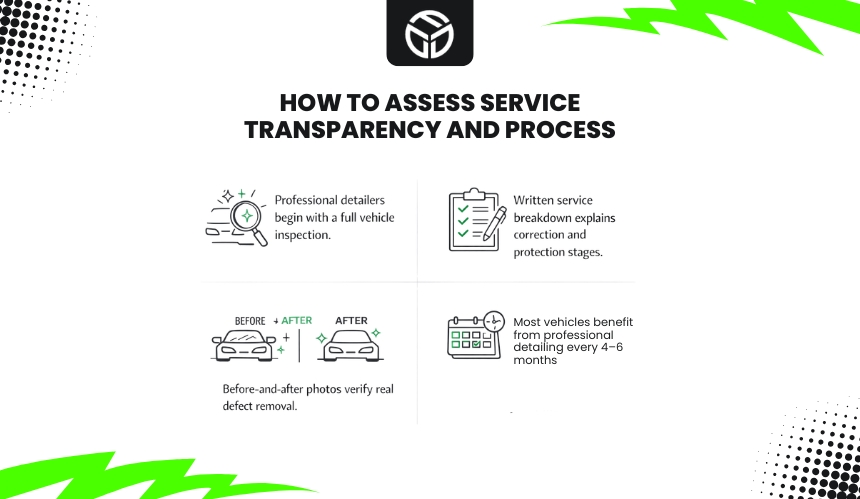
Professional detailing begins with inspection, not a price quote.
Structured Vehicle Inspection
Controlled lighting reveals swirl marks, oxidation, and water spot etching. Surface documentation establishes realistic expectations.
Written Service Breakdown
A professional should provide:
- Decontamination steps
- Correction stages
- Protection type
- Expected durability timeframe
Clear documentation indicates process integrity.
Before-and-After Documentation
Progress photos under proper lighting confirm the removal of the actual defect rather than a temporary cosmetic enhancement.
Questions to Ask Before Hiring
Asking detailed questions reveals technical competence.
Surface Preparation Questions
- What decontamination steps are performed before polishing?
- Is iron removal included?
Correction Safety Questions
- Do you measure paint thickness before compounding?
- How do you determine safe polishing limits?
Protection Durability Questions
- What coating brand is used and why?
- How long should protection realistically last under local conditions?
Professionals should answer confidently with technical explanations.
How Often Should a Vehicle Be Professionally Detailed?
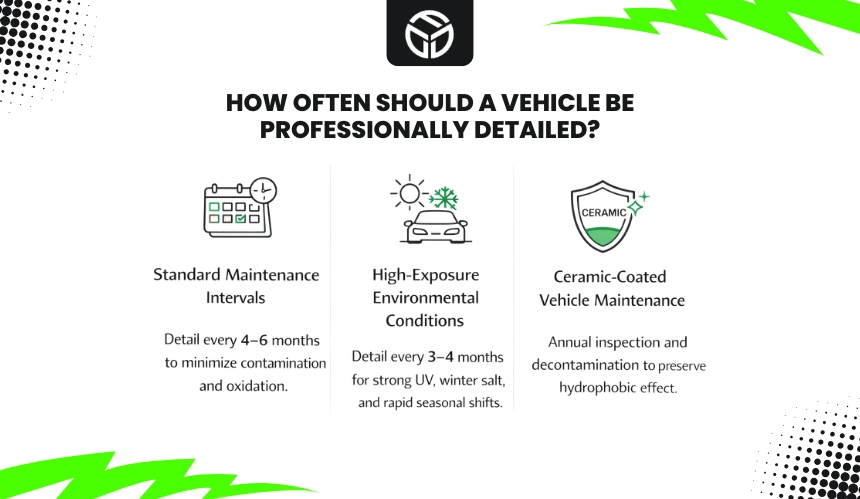
Maintenance frequency depends on exposure and protection type.
Standard Maintenance Intervals
Most vehicles benefit from detailing every 4–6 months to prevent the buildup of contamination and oxidation.
High-Exposure Environmental Conditions
Regions experiencing strong UV exposure, winter salt application, and rapid seasonal shifts may justify detailing every 3–4 months.
Ceramic-Coated Vehicle Maintenance
Ceramic-coated vehicles typically require annual inspection and decontamination to maintain hydrophobic performance.
Drivers in Highlands Ranch, CO often encounter elevated UV intensity and winter road treatment chemicals, which can influence maintenance schedules.
Signs You Have Found a Reliable Car Auto Detailer
Reliable professionals demonstrate consistency, technical awareness, and environmental understanding.
Evidence of Process Discipline
- Controlled lighting inspection
- Paint thickness measurements
- Multi-stage correction plans
Climate-Aware Recommendations
Protection plans should reflect environmental realities rather than generic service packages.
Long-Term Maintenance Guidance
A trustworthy car detailer provides aftercare instructions and realistic expectations for durability rather than promising permanent results.
Frequently Asked Questions
How long does professional auto detailing take?
Standard detailing typically requires 4–8 hours, depending on vehicle size and condition. Multi-stage paint correction or ceramic coating services may require 1–2 full days, including preparation and curing time.
Is ceramic coating necessary for daily drivers?
Daily-driven vehicles benefit from ceramic coatings due to increased UV resistance, chemical protection, and hydrophobic properties. Long-term durability often offsets the costs of repeated waxing.
Can detailing remove deep scratches?
Surface-level scratches within the clear coat can often be corrected. Scratches penetrating the base coat generally require repainting rather than polishing.
How should a vehicle be maintained after detailing?
Maintenance typically involves pH-neutral handwashing, microfiber drying techniques, and avoiding automated brush systems that can create swirl marks.
What is the difference between polishing and paint correction?
Polishing enhances gloss and removes light defects. Paint correction involves multi-stage compounding to remove measurable imperfections while preserving clear coat thickness.